The 5 best English vocabulary apps in 2026
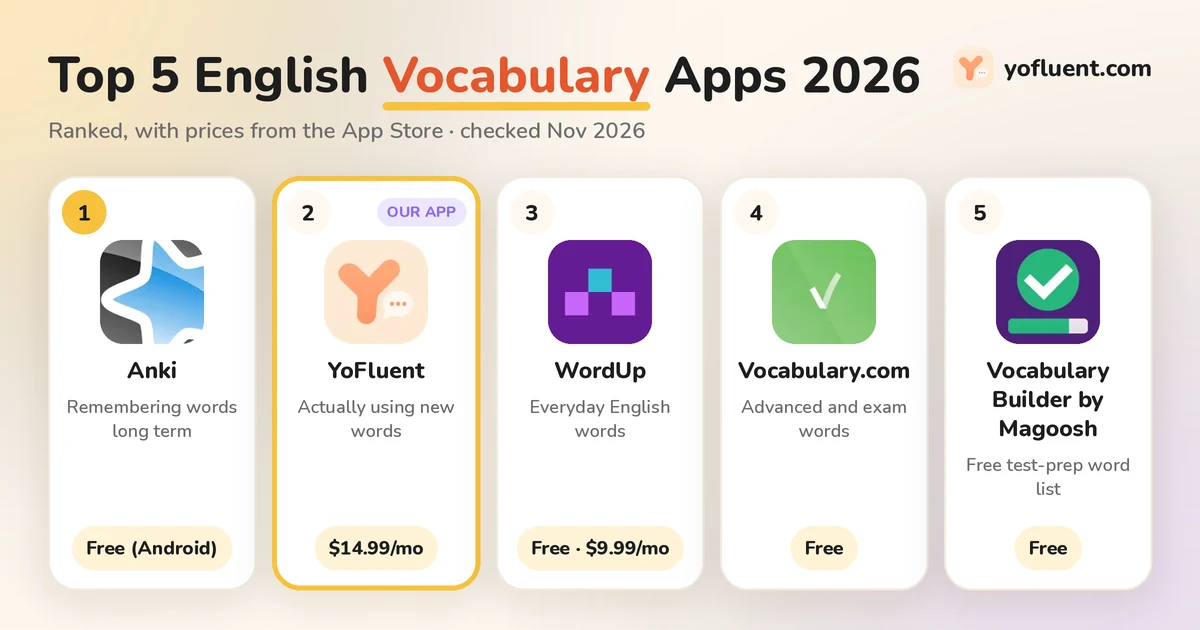
The best English vocabulary apps in 2026 are Anki (flashcards that make words stick), YoFluent (you use new words in real conversations), WordUp (the 25,000 most common words), Vocabulary.com (advanced and exam words) and Magoosh Vocabulary Builder (1,200 free test-prep words). Prices checked on the App Store on 20 November 2026.
By The YoFluent teamUpdated 9 min read
On this page
The 5 vocabulary apps at a glance
Prices from each app’s App Store listing in the US, India and Pakistan on 20 November 2026. Where an app lists several prices for the same plan, we give the range.
- 1
 Anki
- Best for
- Remembering words long term
- US price
- AnkiMobile (iPhone) $24.99 once
- India price
- Free on Android; iPhone ₹2,499 once
- Pakistan price
- Free on Android; iPhone Rs 6,900 once
- Best for
- Actually using new words
- US price
- $14.99/month or $59.99/year
- India price
- Charged in US$ (same plans)
- Pakistan price
- Charged in US$ (same plans)
- Best for
- Everyday English words
- US price
- Pro $9.99–$10.99/month or $49/year
- India price
- Pro ₹299–₹489/month, ₹1,229–₹1,499/year
- Pakistan price
- Pro Rs 900–Rs 1,150/month, Rs 3,900/year
- Best for
- Advanced and exam words
- US price
- Not needed for the app
- India price
- Free
- Pakistan price
- Free
- Best for
- Free test-prep word list
- US price
- Not needed
- India price
- Free
- Pakistan price
- Free
| App | Best for | US price | India price | Pakistan price |
|---|---|---|---|---|
| Anki | Remembering words long term | AnkiMobile (iPhone) $24.99 once | Free on Android; iPhone ₹2,499 once | Free on Android; iPhone Rs 6,900 once |
 YoFluentOur app | Actually using new words | $14.99/month or $59.99/year | Charged in US$ (same plans) | Charged in US$ (same plans) |
 WordUp | Everyday English words | Pro $9.99–$10.99/month or $49/year | Pro ₹299–₹489/month, ₹1,229–₹1,499/year | Pro Rs 900–Rs 1,150/month, Rs 3,900/year |
 Vocabulary.com | Advanced and exam words | Not needed for the app | Free | Free |
 Vocabulary Builder by Magoosh | Free test-prep word list | Not needed | Free | Free |
Why you know words you never use
Every learner has two vocabularies. Your passive vocabulary is the words you recognise when you read or hear them. Your active vocabulary is the words you can produce when you speak. The second is always much smaller, and most vocabulary apps only grow the first.
- Remember the word: spaced repetition (Anki, WordUp) shows a word just before you would forget it.
- Understand it in context: example sentences (Vocabulary.com, Magoosh) show how it’s used.
- Use it: say it in a sentence of your own, in a conversation, at least two or three times. This is the step most apps skip.
Start with useful words: common English phrases, phrasal verbs and words to describe a person.
The 5 apps, one by one
Anki
by Anki Software LLC · ★ 3.9 (2.5k ratings, US App Store)- Feedback
- Spaced repetition flashcards (SM-2 and FSRS)
- Price
- Free on Android, web and computer; AnkiMobile (iPhone) $24.99 once
- Platforms
- Android and web free; iPhone/iPad paid; Mac, Windows, Linux
- Price in India
- Free on Android; iPhone ₹2,499 once
- Price in Pakistan
- Free on Android; iPhone Rs 6,900 once
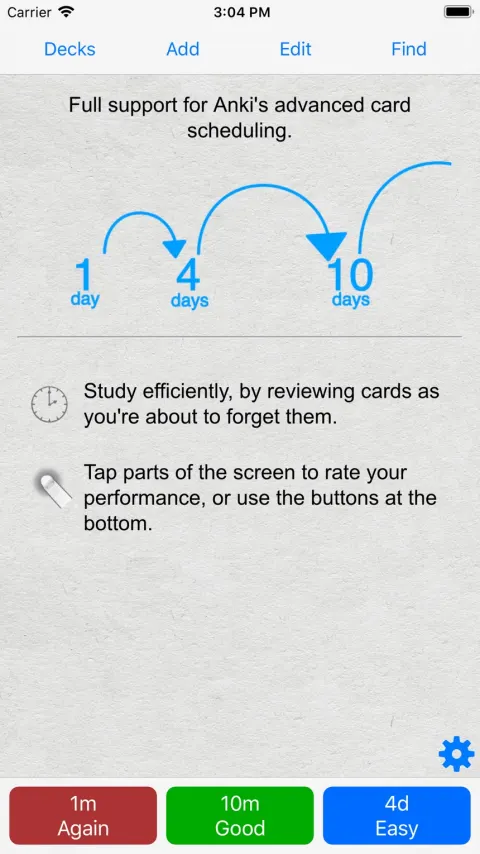
Anki is the flashcard app that long-term learners swear by. Its iPhone listing describes the same SM-2 and FSRS scheduling as the desktop app and free sync with AnkiWeb across iPhone, iPad, Mac, Windows, Linux and the web, with “no subscription, no sync fees”.
Make your cards with a full example sentence, not just a translation: “I’m a reliable team member” sticks far better than “reliable = trustworthy”.
Good
- The most powerful spaced repetition, with the FSRS scheduler
- Free on Android (AnkiDroid), on the web and on computers
- Free sync between all your devices, no subscription
Not so good
- The iPhone app costs $24.99 (₹2,499) once
- You make or download your own decks
- Plain design; takes 20 minutes to learn
Pick it if you’re serious about remembering thousands of words, for an exam or for life.
Visit Anki →YoFluentOur app
by YoFluent- Accent
- American or British tutor
- Feedback
- Practice words checked in each call; saved words with review
- Price
- 3-day trial for $0.99; $14.99/month or $59.99/year
- Platforms
- Web browser, Android
- Price in India
- Charged in US$ (same plans)
- Price in Pakistan
- Charged in US$ (same plans)
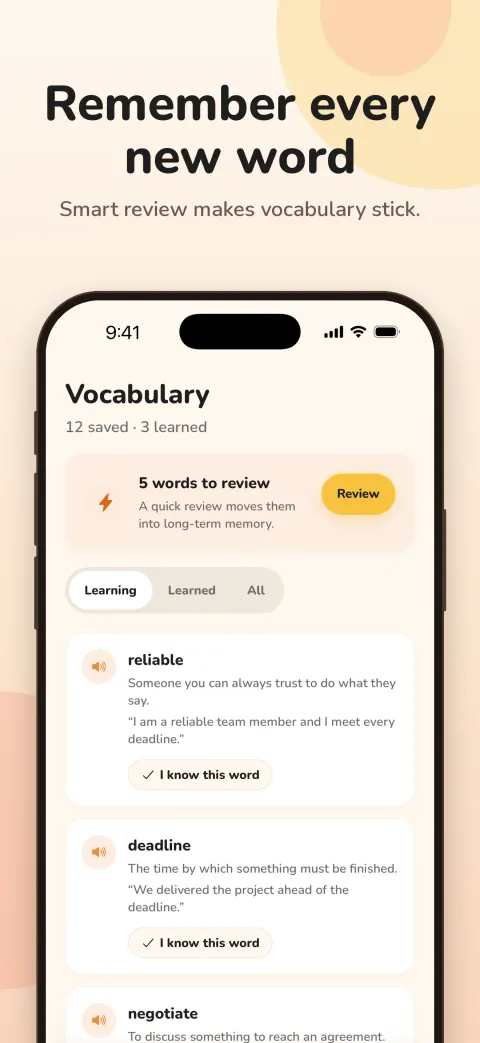
YoFluent is our app, and it attacks the active-vocabulary problem. Before a call you get a few practice words for the situation (“reliable”, “deadline”, “negotiate” for a job interview). During the call you try to use them; the report shows which ones you used and which to try next time.
New words go into your vocabulary list with a meaning and an example, and a quick review brings back the ones you’re about to forget. The vocabulary score after each call tells you if you’re using a wider range of words over time.
Good
- Practice words for each call, marked “Used it!” when you say them
- Saved words with a short review to move them into long-term memory
- A vocabulary score after every conversation
Not so good
- Not a word-list app: you learn words through conversations
- No free plan: the trial costs $0.99
- No iPhone app yet (works in the iPhone browser)
Pick it if you already know lots of words but don’t use them when you speak.
See YoFluent →WordUp
by Geeks ltd · ★ 4.8 (13.9k ratings, US App Store)- Feedback
- AI knowledge map, 9 challenge types, spaced repetition
- Price
- Free download; Pro $9.99–$10.99/month or $49/year
- Platforms
- iPhone, iPad, Android
- Price in India
- Pro ₹299–₹489/month, ₹1,229–₹1,499/year
- Price in Pakistan
- Pro Rs 900–Rs 1,150/month, Rs 3,900/year
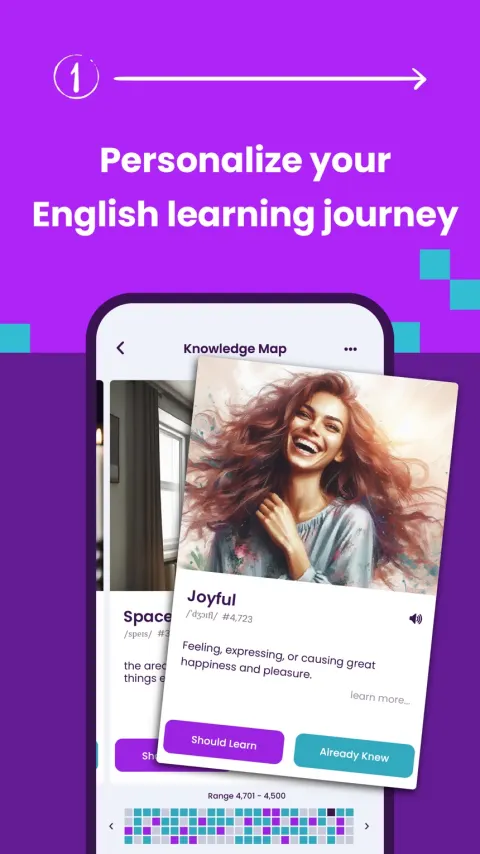
WordUp ranks words by how common they are and builds a “knowledge map” of what you already know, according to its listing. With 4.8 stars from about 13,900 US ratings, it’s the best-rated app here. In India, Pro cost ₹299 to ₹489 a month or ₹1,229 to ₹1,499 a year on 20 November 2026.
Good
- Built on the 25,000 most common English words, so you learn useful ones first
- AI knowledge map skips the words you already know
- 9 challenge types including pronouncing and using words in context
Not so good
- Many plans and prices
- Pro needed for full access
- Less useful for exam-specific word lists
Pick it if you’re intermediate and want to fill the gaps in everyday English words.
Visit WordUp →Vocabulary.com
by Curiosity Media · ★ 4.3 (5k ratings, US App Store)- Feedback
- Adaptive word game + dictionary
- Price
- Free app
- Platforms
- iPhone, iPad, Apple Watch, web
- Price in India
- Free
- Price in Pakistan
- Free
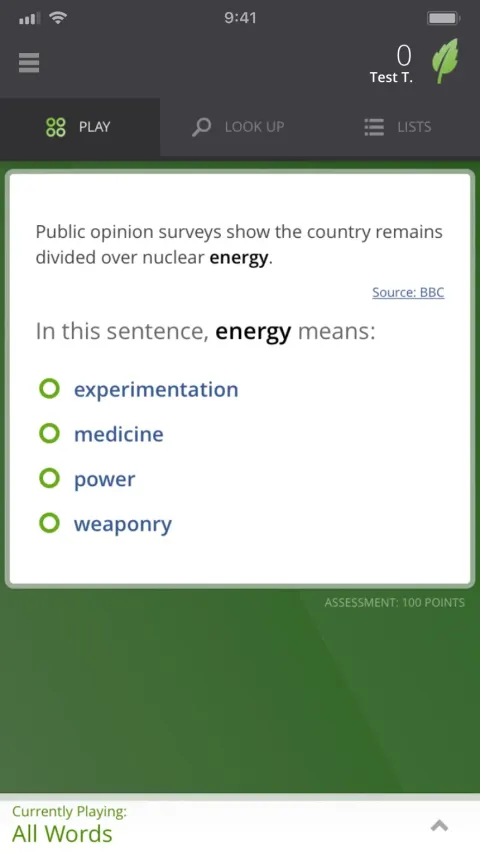
Vocabulary.com turns learning words into an adaptive quiz game: words you miss come back more often. It’s free, and the website has the same system plus word lists for books and exams.
Good
- Free app
- Adaptive game that adjusts to the words you miss
- A clear learner’s dictionary built in
Not so good
- Words lean advanced and academic
- Lower rating (4.3) than the others
Pick it if you’re advanced or preparing for an exam and want harder words for free.
Visit Vocabulary.com →Vocabulary Builder by Magoosh
by Magoosh · ★ 4.7 (7k ratings, US App Store)- Feedback
- Quizzes on 1,200 words, three levels
- Price
- Free
- Platforms
- iPhone, iPad, web
- Price in India
- Free
- Price in Pakistan
- Free
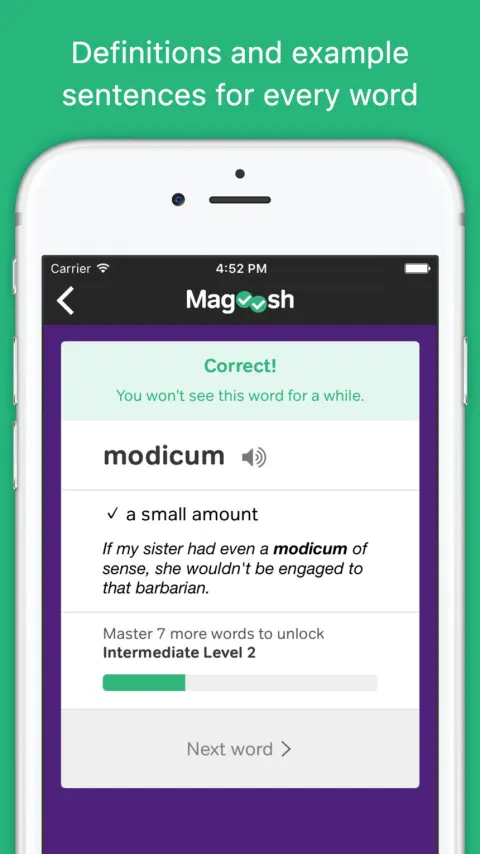
Magoosh’s free Vocabulary Builder quizzes you on 1,200 words in three levels, and its listing says it gives free access to Magoosh’s general, GRE, SAT and TOEFL vocab quizzes. For IELTS, pair it with our IELTS speaking topics so you practise the words out loud.
Good
- Completely free
- 1,200 words picked by a tutor, with definitions and example sentences
- Basic, intermediate and advanced levels
Not so good
- Built for GRE, SAT and TOEFL: many words are rare in conversation
- No speaking or pronunciation
- Simple quiz format
Pick it if you’re preparing for TOEFL or another exam and want a free, focused word list.
Visit Vocabulary Builder by Magoosh →A 15-minute daily vocabulary routine
- 5 minutes, review: your due flashcards in Anki or WordUp. Never skip this: it’s what makes words stick.
- 5 minutes, new words: 3 to 5 new words a day, each with an example sentence you write yourself.
- 5 minutes, use them: say each new word in a sentence out loud, or use it in a conversation. A word you’ve said three times is yours.
How we chose these apps
We read the top “English vocabulary app” lists (most mix English with other languages) and kept apps built for English vocabulary, then checked each one’s App Store listing, prices and ratings in the US, India and Pakistan on 20 November 2026.
Disclosure: YoFluent is our app. It isn’t a flashcard app; it ranks second because it’s the only app here that checks whether you use your new words in conversation. For pure memorisation, Anki is better.
Frequently asked questions
What is the best app to improve English vocabulary?
Anki is the best for remembering words, WordUp for learning the most common everyday words, and Vocabulary.com and Magoosh are free for advanced and exam words. To start using new words when you speak, practise them in conversation, for example in YoFluent, which checks whether you used your practice words.
Which vocabulary app is free?
Vocabulary.com and Magoosh Vocabulary Builder are free. Anki is free on Android, on the web and on computers; the iPhone app costs $24.99 once. WordUp is free to download with a paid Pro plan.
How many English words do I need to speak fluently?
Around 2,000 to 3,000 of the most common words cover most everyday conversation. Knowing them actively, so you can use them when you speak, matters more than knowing many rare words.
How many new words should I learn a day?
Three to ten new words a day is plenty if you review them. Learning 50 words a day and forgetting most of them is slower than learning five and using each one in a sentence.
Is Anki good for learning English vocabulary?
Yes. Anki’s spaced repetition is one of the most effective ways to remember words. Add full example sentences and audio to your cards, and review every day.
Turn new words into words you use
Get practice words for each conversation and see which ones you used. 3 days for $0.99.
Start your 3-day trialGET IT ONGoogle Play